
Magnetic Resonance Imaging (MRI) produces detailed images of the body using magnetic fields and radio waves. MRIs can provide early detection of many conditions. If there is an abnormality, an MRI can show where it is, its size, and whether or not it has spread.
In most cases there is no special preparation needed to have an MRI. You can carry on with your normal routine; you can eat and drink your usual diet, and you can take any prescription medicine you need.
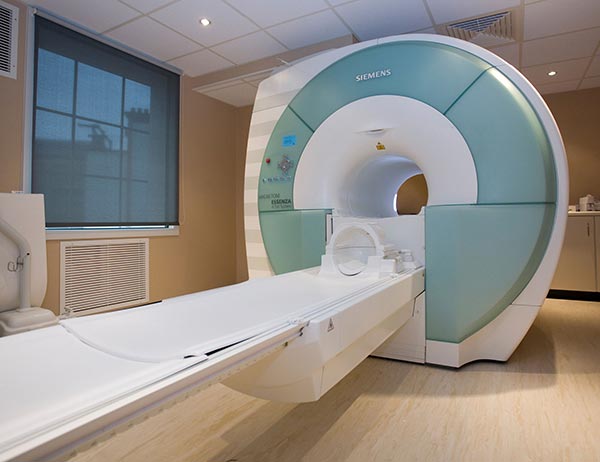
MRI Examinations
Commonly Examined Areas: Brain and blood vessels, face & sinuses, spine (cervical, thoracic, lumbar), chest (lungs, heart, blood vessels), abdominal organs (liver, kidney, spleen, pancreas), pelvis & hips, and musculoskeletal joints (shoulder, knee, wrist).
What to Know:
- Exams take 30–60 minutes, with several short scans of 2–8 minutes each.
- Remove metal objects (jewelry, glasses, dentures, etc.).
- MRI is safe; no health risks from magnetic fields or radio waves. Tell the technologist if pregnant or if you have conditions that limit MRI use.
- Contrast agents may be used via IV in certain cases; all are FDA-approved.
Equipment:
- Siemens Espree 1.5T open MRI for comfort, especially for claustrophobic or larger patients.
- Siemens Avanto 1.5T short bore MRI provides high-quality imaging in a traditional scanner.
THE SERVICES LISTED ON THIS WEBSITE ARE FOR GENERAL INFORMATION PURPOSES ONLY AND DO NOT INCLUDE ALL SERVICES OF GREENSBORO RADIOLOGY. WHILE WE STRIVE TO KEEP THE INFORMATION UP TO DATE AND CORRECT, WE MAKE NO REPRESENTATIONS OR WARRANTIES OF ANY KIND, EXPRESS OR IMPLIED, ABOUT THE CONTENT, COMPLETENESS, ACCURACY, RELIABILITY, LEGALITY, SUITABILITY OR AVAILABILITY, WITH RESPECT TO THE SERVICES CONTAINED ON THIS WEBSITE.